
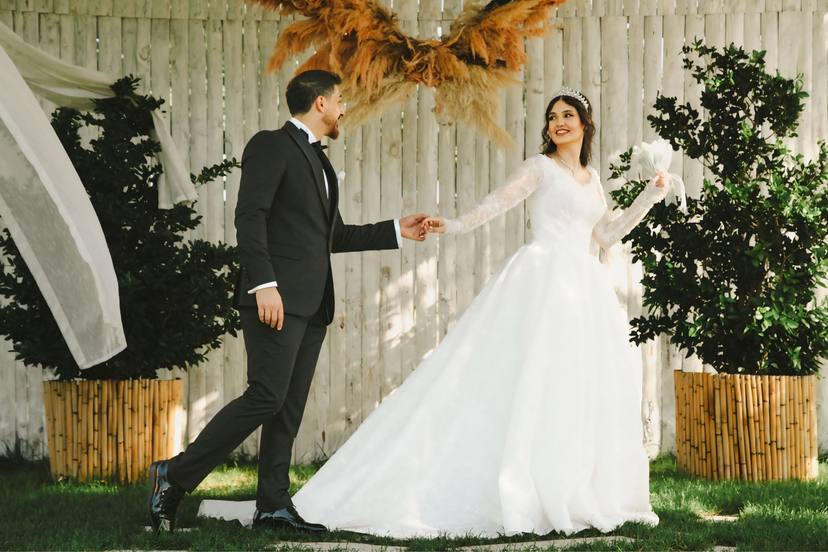
From packing them safely for the flight home to cleaning, preserving or giving them a second life, here's what to do with your dress and suit after marrying abroad.
You have said your vows under the Mediterranean sun, the photographs are done, and the last glass of wine has been poured. Somewhere in the celebration, though, a practical question tends to surface: what happens to the dress and suit now? With a little forethought, getting them home safely and deciding on their future is far simpler than it sounds.
Packing for the journey home
Before you leave for your wedding, it is worth thinking about the return trip as much as the outward one. A dress that travelled out in a garment bag in good condition can come home crushed, marked by sun cream, sand or spilt prosecco, or simply too bulky to fit in a case. Our concierge team can advise on suitable garment bags and whether your dress is better carried as hand luggage or safely checked, depending on the fabric and style. Suits travel more easily, but a breathable bag and a little tissue paper in the shoulders and sleeves will stop creasing on a long flight home.
If you are staying on for a honeymoon elsewhere in Cyprus or moving on to another leg of your trip, think about whether you really want to carry the dress with you for the rest of the holiday. Many couples arrange for it to be shipped home separately, or left with family who are flying back sooner, rather than living out of a suitcase around an enormous gown.
Thinking about a wedding abroad? Talk to a planner: a free, no-obligation chat, and we reply within one working day.
Start your enquiryDealing with sand, sea air and sun cream
A beach or coastal ceremony is one of the loveliest ways to marry in Cyprus, but sand, salt air and sun cream residue do have an effect on fabric, particularly delicate silks, lace and beading. Do not be tempted to brush off sand vigorously or scrub at marks yourself, as this can push dirt further into the fibres or damage embellishment. Instead, gently shake off what you can, lay the dress flat or hang it loosely, and get it to a specialist cleaner as soon as possible once you are home. The longer stains sit, particularly anything with sugar or alcohol in it, the harder they become to remove.
Suits fare better outdoors generally, though linen and lighter summer fabrics, popular for a hot Cyprus ceremony, do mark more easily than wool. A light brush down and an airing before packing will help enormously.
Cleaning and preservation
Once home, resist the urge to tuck the dress straight into a wardrobe. Professional wedding dress cleaning and preservation is widely available in the UK and Ireland, and specialists know how to treat delicate fabrics, remove hidden stains that have not yet darkened, and pack the gown in acid-free tissue and a breathable box to prevent yellowing over time. This is worth doing even if you are not certain you want to keep the dress forever, since a few weeks' delay can make stains permanent, whereas the dress itself can always be dealt with later.
Suits generally need nothing more than a proper dry clean, though if it is a fabric or cut you intend to wear again, ask your cleaner about any specific finishing the maker recommends.
Second weddings, hand-me-downs and alterations
Not every dress or suit needs to go into storage and stay there. Some couples have a daughter, niece or close friend in mind who might wear the dress one day, in which case preservation now protects that possibility. Others choose to have the dress altered into something wearable again: a shorter cocktail-length version for future anniversaries, or a christening gown for a future child, are both popular choices among our couples.
Suits are often the easiest to give a second life, since a well-cut jacket and trousers in a classic colour can simply re-enter the wardrobe for smart occasions, rather than being kept for best.
Selling, donating or repurposing
If you know you will not wear the dress or suit again and have no sentimental reason to keep it, selling or donating are both worth considering. There is a healthy market for pre-loved wedding dresses, particularly well-known designers or styles in good condition, and several UK charities accept wedding attire specifically to raise funds for bridal or hospice-related causes. Some couples choose to have part of the fabric made into keepsakes instead, such as a christening gown panel, a ring cushion or a framed piece alongside the wedding invitation, which can feel like a meaningful way to let the rest go.
Keeping the memory, not just the dress
Whatever you decide, it is worth remembering that the dress and suit are lovely reminders of the day, but they are not the only ones. Many couples find that once the photographs are back and the thank-you cards are written, the question of what to do with the outfits themselves becomes much less emotionally loaded, and the practical choice, whether that is preservation, alteration or passing it on, becomes easier to make without pressure.
If you are still at the planning stage and wondering about anything from what to wear for a Cyprus ceremony to how your dress will travel, we are always happy to talk it through. Weddings in the Sun has been helping couples from the UK and Ireland plan weddings across Cyprus, Greece, Malta, Spain and Italy, with full planning, guest accommodation and concierge support throughout, and genuinely exceptional value in Cyprus in particular. Do get in touch for a free consultation, and let us help you think through the details, right down to the dress bag.