
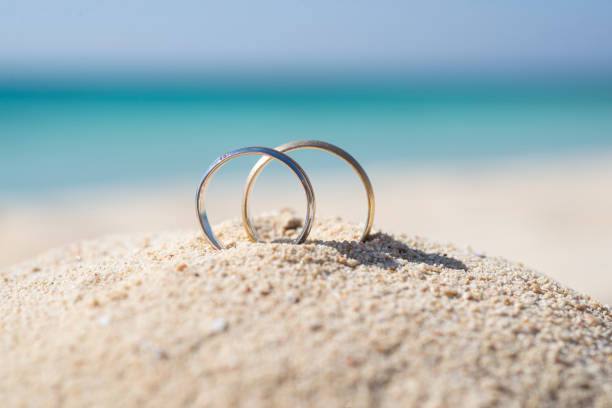
From customs rules to safekeeping on the day, here's what every couple should consider about wedding rings before marrying abroad.
Somewhere between choosing your venue and writing your vows, there is a quieter decision to make: what happens to your rings between now and the moment you exchange them. It is easy to overlook, and yet a little forward planning here saves a surprising amount of worry later.
Buying before you travel or buying at your destination
Most couples we work with buy their rings at home, simply because it is familiar ground — you can try sizes in person, compare metals and settings, and take your time without the pressure of travel dates looming. This is generally the simplest route, and we would always suggest having rings finalised well before you fly rather than leaving it as a last-minute task alongside packing.
That said, some couples like the idea of buying a ring at their destination as part of the experience — a Cypriot-made band, for instance, as a keepsake of where you married. If this appeals, allow plenty of time before the ceremony for sizing and any adjustments, and treat it as a lovely extra rather than something to arrange under time pressure. We are always happy to suggest reputable local jewellers as part of your planning.
Thinking about a wedding abroad? Talk to a planner: a free, no-obligation chat, and we reply within one working day.
Start your enquiryTravelling with your rings
If you are bringing rings from home, pack them in your hand luggage, never in hold luggage. Hold luggage goes astray far more often than people expect, and rings are not something you want to be chasing through an airline's lost property system on your wedding morning.
A small, soft pouch or a padded ring box tucked into a zipped inner pocket is usually safer than leaving them in their original retail box, which can look valuable and draws attention. Some couples prefer to wear the rings on a chain or keep them in a money belt for the flight itself — whatever gives you peace of mind is the right approach.
It is also worth knowing that security staff may ask to see rings during hand luggage checks, particularly if they are in a sealed box. This is routine and nothing to worry about, but having them easily accessible rather than buried in a bag saves a little stress at the airport.
Documentation, receipts and insurance
Keep the original receipt or valuation certificate with your travel documents, not packed away with the rings themselves. If you are asked about the rings at customs, or if you need to make an insurance claim, this paperwork is your proof of value and ownership.
Check your travel insurance policy carefully. Many standard policies cap the value of jewellery covered under a single item or an overall valuables limit, and wedding rings can easily exceed this, especially for anything with diamonds or unusual metals. It is often worth adding specific cover, either through your travel insurer or an extension to your home contents policy, for the period you are away. This is a small cost against genuine peace of mind.
If your rings are particularly valuable or sentimental — an heirloom stone reset into a new band, for example — photograph them clearly before you travel, including any engraving or distinguishing marks. This is useful for insurance purposes and, in the unlikely event of loss, for replacement.
Climate, sizing and engraving timing
Heat and humidity can cause fingers to swell slightly, which is worth bearing in mind if you are having rings sized close to your wedding date. A ring that fits comfortably in a UK spring might feel a touch snug in Cyprus sunshine, which, with over 300 days of it a year, is rather the point of marrying there. If in doubt, have your ring fitted slightly on the looser side rather than tighter.
If you are having rings engraved, do this well in advance rather than at the last minute. Engraving errors are more easily corrected with time in hand, and you do not want to discover a misspelt date the night before you fly.
Keeping rings safe on the day itself
On the wedding day, it is worth deciding in advance who is responsible for the rings until the ceremony — typically a best man, maid of honour, or a trusted family member rather than either of you. Destination weddings often involve more moving parts than a local wedding — transfers, changing rooms, outdoor settings — so a clear, simple plan for where the rings live until the exchange avoids any last-minute scramble.
Many of our couples find it reassuring to have the rings handed to the venue coordinator or wedding planner shortly before the ceremony, kept in a secure, named pouch until the celebrant calls for them. It sounds like a small detail, but it is one less thing for you to think about on a day that already holds quite enough.
We take care of a great deal behind the scenes for couples marrying abroad — full planning, guest accommodation, and a concierge team on hand throughout your stay — precisely so that the practical details, rings included, are never left to chance. Cyprus in particular offers excellent value for a destination wedding without compromising on setting or service.
If you would like to talk through your plans, including the small but important matter of your rings, we would be glad to arrange a free consultation and help you feel properly prepared, right down to the last detail.