
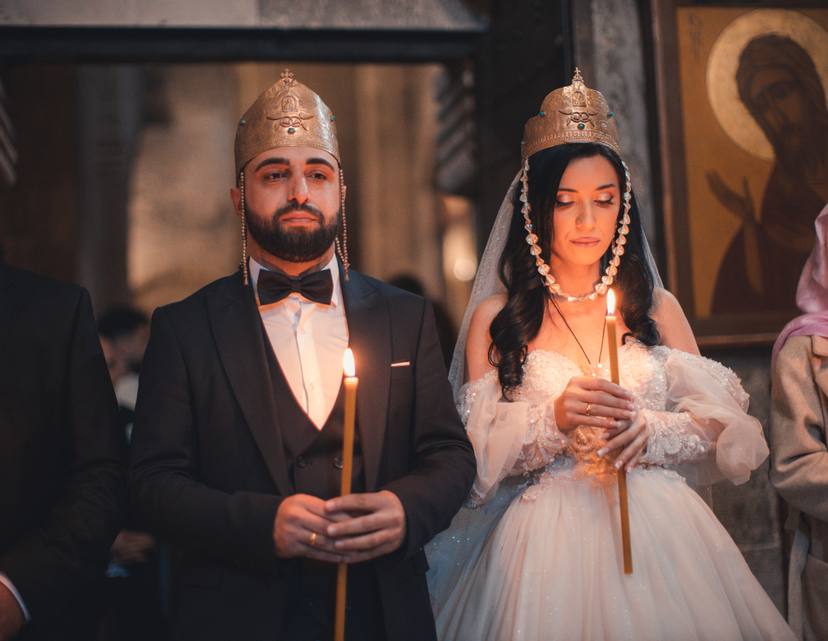
How to weave two families' customs into a single, heartfelt destination wedding, without losing what matters to either side.
When two families come from different backgrounds, a wedding abroad can feel like the perfect neutral ground — a place that belongs to neither side exclusively, and so, in a lovely way, belongs to both. Getting there with grace takes a little thought, but it is entirely achievable, and the result is often the most personal, most talked-about wedding your guests will ever attend.
Start with conversations, not logistics
Before any venue is booked, it is worth sitting down with both families, separately if that is easier, to understand what each tradition means to them in practice. Is it a particular ceremony element, a style of dress, specific music, a blessing, a ritual exchange, or simply having certain foods at the celebration? Traditions vary enormously even within the same faith or culture, from family to family and region to region, so it is never safe to assume. Ask open questions, listen for what truly matters versus what is simply expected, and you will usually find there is more flexibility than anyone first assumed.
Decide what "one wedding" means for you
Thinking about a wedding abroad? Talk to a planner: a free, no-obligation chat, and we reply within one working day.
Start your enquirySome couples choose a single blended ceremony, drawing symbolic elements from each culture into one sequence. Others prefer two distinct ceremonies, perhaps on the same day or over a long weekend, each one complete and unshortened. There is no correct answer. A blended ceremony can feel seamless and symbolic, but it asks a skilled celebrant to balance pacing and meaning carefully. Two ceremonies give each tradition full room to breathe, though they ask more of your guests' time and, often, your budget. Talk honestly with your partner about which approach feels true to you both, then bring that vision to your planner so it can be built around properly from day one.
Choosing a destination that can flex with you
Cyprus is a destination we return to again and again for exactly this kind of wedding, not least because it offers such reliable warmth, with over 300 days of sunshine a year, and a dedicated on-island team who can coordinate multiple suppliers, timings and ceremony elements without anything feeling rushed or bolted on. Our Cyprus packages run from £8,199 to £11,199, and because we handle full planning, guest accommodation and concierge throughout, you are never trying to manage two sets of traditions long-distance on your own. Beyond Cyprus, we also plan weddings across Greece, Malta, Spain and Italy, each with its own venues and character, so if one destination suits one tradition better aesthetically, or is simply easier for a particular side of the family to reach, that is worth exploring too.
If your families' traditions sit within Asian wedding customs, whether Hindu, Sikh, Muslim, Jain, interfaith or otherwise, we are always glad to talk through what you are picturing. Celebrations in these communities vary widely by family, and we would never assume what yours should include; instead we listen to what you describe and work with suppliers who can accommodate it, from specific ceremony structures to catering and colour schemes to timings that allow for multiple outfit changes or ritual stages across the day.
Practical details that keep both sides comfortable
Think about dietary requirements early, including who needs separate catering and who does not, and whether any part of the meal needs specific preparation. Consider dress, both yours and your guests', as some traditions call for particular colours to be worn or avoided. Factor in timings generously; multi-element ceremonies rarely run to a tight schedule, and guests who have travelled a long way appreciate a day that feels unhurried rather than squeezed. Music and officiants deserve early attention too, since finding a celebrant comfortable leading a blended or bilingual ceremony, or coordinating with a second officiant for a separate ritual, takes advance planning rather than a last-minute request.
For newer destinations such as Thailand, Turkey, Dubai, Tenerife and the Maldives, we are only just beginning to build our offering, so we do not yet have venues, suppliers or pricing in place there. If one of these locations speaks to your families for personal reasons, we welcome your enquiry and will talk through what might be possible, including checking the current legal and ceremonial position with official sources, so you have honest information rather than guesswork while our plans develop.
Letting both families feel seen
The small gestures often matter as much as the large ones. A reading or blessing delivered in a language one grandparent speaks fluently, a favourite dish served at the welcome dinner, a seating plan that places key family members where they can take part comfortably rather than watch from the side. None of this needs to be elaborate to feel generous. What guests remember is not perfection, but the sense that their part of the story was included with care.
A wedding abroad that brings two traditions together asks a little more conversation and a little more coordination, but it rewards you with a day that is unmistakably, personally yours, rather than a template borrowed from either side alone.
If you are picturing a wedding that honours where you both come from, we would be glad to help you shape it. Get in touch for a free consultation, and let us talk through how your two traditions might come together beautifully in one place.