
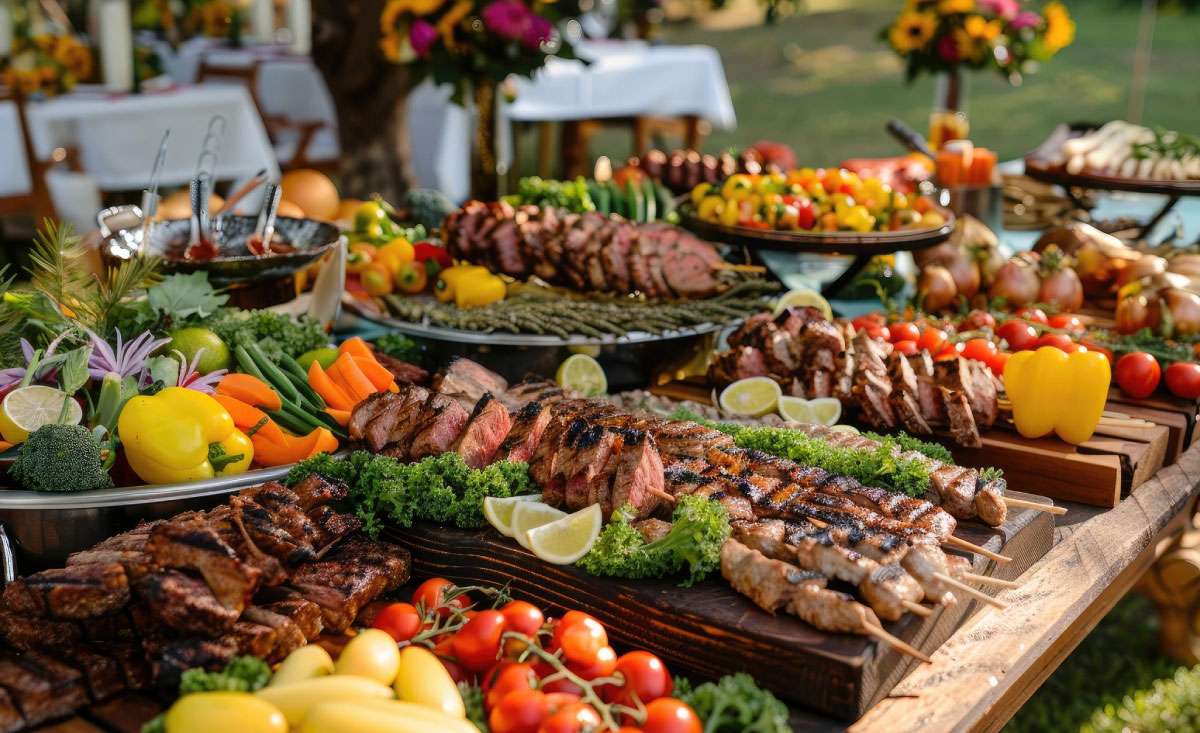
From welcome drinks to wedding breakfast, here's how to plan food your guests will remember fondly, wherever your wedding takes you.
Food has a way of staying in the memory long after the confetti has settled. Guests may forget the colour of your table linen, but they will talk for years about the meze that kept arriving, or the sorbet that appeared between courses on a warm evening. Getting the menu right is one of the most rewarding parts of planning a wedding abroad, and one where a little early thought goes a long way.
Start with the style of meal, not the dishes
Before you think about individual courses, it is worth deciding what kind of dining experience you want. A formal plated wedding breakfast feels different from a long, sociable meze-style spread with shared platters down the centre of the table, which in turn feels different from a relaxed barbecue on the beach at sunset. In Cyprus particularly, a traditional meze is a wonderful option for destination weddings, since it suits the climate, encourages guests to linger and talk, and showcases local produce without anyone having to commit to a single dish in advance. Once you know the style, choosing specific dishes becomes much easier.
Tastings: what to expect and when to book one
Most of our venues offer a tasting session, usually scheduled during a planning visit in the months before the wedding, though some couples arrange this on an earlier trip if they are combining it with a venue viewing. A tasting is your chance to try the proposed menu, discuss portion sizes for a wedding-day setting, and make adjustments — perhaps a sauce is too rich for a summer afternoon, or a starter needs a lighter counterpart. It is also the moment to talk through wine pairings and any local specialities the chef would recommend for your particular date and season. We arrange these tastings as part of our full planning service, so you know exactly what you are booking before contracts are signed.
Dietary needs, handled properly rather than as an afterthought
Every wedding now includes guests with a range of dietary requirements, from coeliac disease and nut allergies to vegan, halal or kosher preferences. The key is to ask early and ask clearly. We recommend building a simple dietary question into your invitations or RSVP process, with space for guests to give real detail rather than a tick box. Once we have that information, we brief the venue's kitchen directly, so that alternatives are planned in from the start rather than improvised on the day. Good venues abroad are used to catering for varied dietary needs and will usually offer a dedicated alternative dish for each course, rather than a single catch-all option that leaves some guests feeling like an afterthought. It is also worth flagging any severe allergies separately, so the kitchen can take extra care with cross-contamination.
Children, elderly relatives and guests who simply do not eat much meze
A full-scale wedding breakfast is not always right for every guest. Children often prefer something simpler and more familiar, and many venues are happy to offer a children's menu alongside the main event. Elderly relatives may find rich, multi-course meals heavy in hot weather, and some guests, whatever their age, will just prefer a lighter option. Raising this with your venue in advance means alternatives can be quietly available without fuss, rather than becoming a last-minute request on the day itself.
Making the most of local produce and flavour
One of the pleasures of marrying abroad is the chance to serve food that genuinely reflects where you are. In Cyprus, that might mean halloumi grilled to order, slow-cooked lamb kleftiko, fresh seafood, or a table laden with dips, olives and warm bread, all benefiting from produce grown locally and served at its best rather than flown in. The same is true across our destinations in Greece, Malta, Spain and Italy, each with its own culinary character worth embracing rather than replacing with a more familiar but less memorable alternative. Many couples like to include one or two dishes with personal meaning, whether that is a favourite family recipe reimagined by the venue's chef or a nod to where you first travelled together, alongside the local specialities.
Timing, drinks and the details that tie it together
Menus abroad often need to be planned with the climate in mind. A rich, heavy course that suits a British winter wedding may feel wrong on a warm Mediterranean evening, and chefs at our venues are usually very willing to adjust accordingly. It is also worth thinking about the pacing of the meal alongside speeches, music and any breaks for photographs, so the food arrives at a good moment rather than sitting and cooling, or clashing with the toasts. Drinks matter too — local wines, a signature cocktail reflecting the destination, or a coffee and liqueur to close the meal, all add character without complication.
Getting the food right for a wedding abroad is entirely achievable with the right guidance, and it is one of the areas where our full planning service, including guest accommodation and concierge support, makes the biggest practical difference. Cyprus in particular offers exceptional value alongside its produce and hospitality, with packages from £9,500 to £10,900, and it remains our most popular destination for exactly this reason.
If you would like to talk through menu options, tastings or how we handle dietary requirements for your guests, we would be glad to arrange a free consultation and start building a day that tastes as good as it looks.