
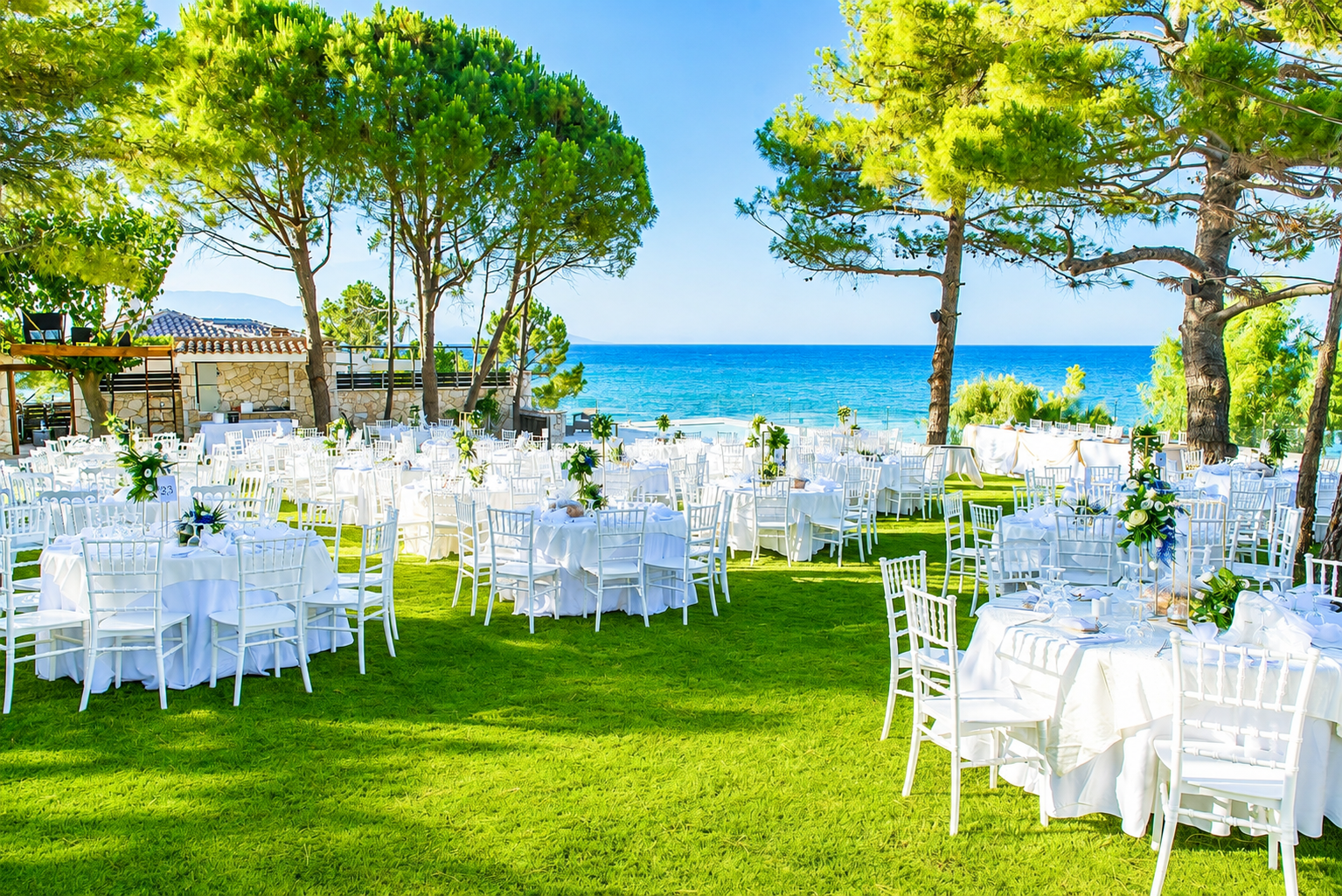
A clear, month-by-month guide to planning your destination wedding, from the first booking to the final week.
There is a particular kind of calm that comes from knowing exactly what needs doing, and when. Planning a wedding overseas can feel like a great many moving parts, but with the right timeline, each decision falls into place at a sensible pace, leaving you free to actually enjoy your engagement.
Here is how we advise couples to sequence their planning, whether you are marrying on a clifftop in Cyprus, an island in Greece, or a hillside in Italy.
12 to 18 months before: choosing your destination and date
This is the foundation stage, and it is worth taking your time over it. Think about the season you want (Cyprus, for instance, offers reliable warmth from April through to late October, with May, June, September and October being particularly popular for their milder temperatures), how many guests you realistically expect to travel, and what kind of setting matters most to you — a beachfront terrace, a historic chapel, a private villa.
Once you have a shortlist, this is the point to book your venue and, if you are working with a planning company, to confirm your wedding coordinator. Popular venues in Cyprus, Malta and along the Amalfi Coast can be booked well over a year ahead, particularly for peak summer Saturdays. If you have your heart set on a specific week, earlier is always safer.
This is also the moment to send out save-the-dates. Because your guests will need to arrange flights, holiday leave and possibly childcare, giving them as much notice as possible is one of the kindest things you can do.
9 to 12 months before: legal groundwork and key suppliers
Every country has its own requirements for marrying legally abroad, and Cyprus is refreshingly straightforward compared with some destinations, which is one of the reasons it remains such good value for couples — fewer complications tend to mean fewer costs. Even so, documents such as birth certificates, decrees absolute or affidavits of marital status often need to be apostilled, and this can take several weeks, so it is worth starting the process now rather than leaving it until the final months.
This is also the point to secure your photographer and videographer, as the best ones in each destination are often booked a year or more in advance. If live music, a particular officiant, or a specific florist matters to you, add them to this list too.
If you are booking through a full-planning company, much of this — the legal paperwork, the supplier recommendations, the contracts — is handled on your behalf, which takes a great deal of pressure off this stage.
6 to 9 months before: guest accommodation and travel
With your date and venue confirmed, your guests can now begin booking flights and accommodation in earnest. If you are working with a wedding planner, this is typically when group accommodation blocks are arranged, giving your guests preferential rates and a choice of rooms without each person needing to negotiate individually. It also means everyone tends to end up staying near one another, which makes the whole week feel more like a shared occasion than a series of separate holidays.
This is a sensible time to send formal invitations with full details, so guests can finalise their travel plans. It is also worth thinking now about any additional events — a welcome dinner, a beach day, a post-wedding brunch — as these often need their own bookings.
If you are having a wedding dress made or heavily altered, this is the stage to have your first fittings, allowing time for adjustments before travel.
3 to 6 months before: the finer details
With the larger decisions made, attention turns to the details that shape the day itself. This includes finalising your menu and drinks, confirming timings with your venue and suppliers, choosing music for each part of the day, and settling on flowers, décor and any styling touches that reflect you as a couple.
This is also when many couples apply for their marriage licence in the destination country, as some places require this to be done a set number of days before the ceremony rather than months in advance. Your planning team should be able to tell you exactly when this window opens for your chosen country.
If you would like a rehearsal, or a small gathering the evening before, now is the time to pencil it in with your venue.
4 to 8 weeks before: final confirmations
In the last stretch before travel, focus turns to confirming numbers. Final guest counts go to your caterer, final seating plans take shape, and any last payments to suppliers are usually due around this time. This is also when you should reconfirm all travel arrangements — your own flights, transfers, and those of close family involved in readings or speeches.
Pack any wedding-day items you are bringing from home, such as rings, decorative details or outfits, in hand luggage rather than checked bags, simply to remove any risk of delay.
The final week
Once you arrive, the goal is for you to have as little to think about as possible. A good on-the-ground team will handle deliveries, supplier coordination and any last-minute adjustments, leaving you free to see family, rest, and settle into the atmosphere of the place you have chosen to marry in.
If you would like guidance tailored to your own dates and destination, we would be glad to talk it through with you. Get in touch with Weddings in the Sun for a free consultation, and let us help you build a timeline that suits your wedding, wherever in the sun you choose to say your vows.