
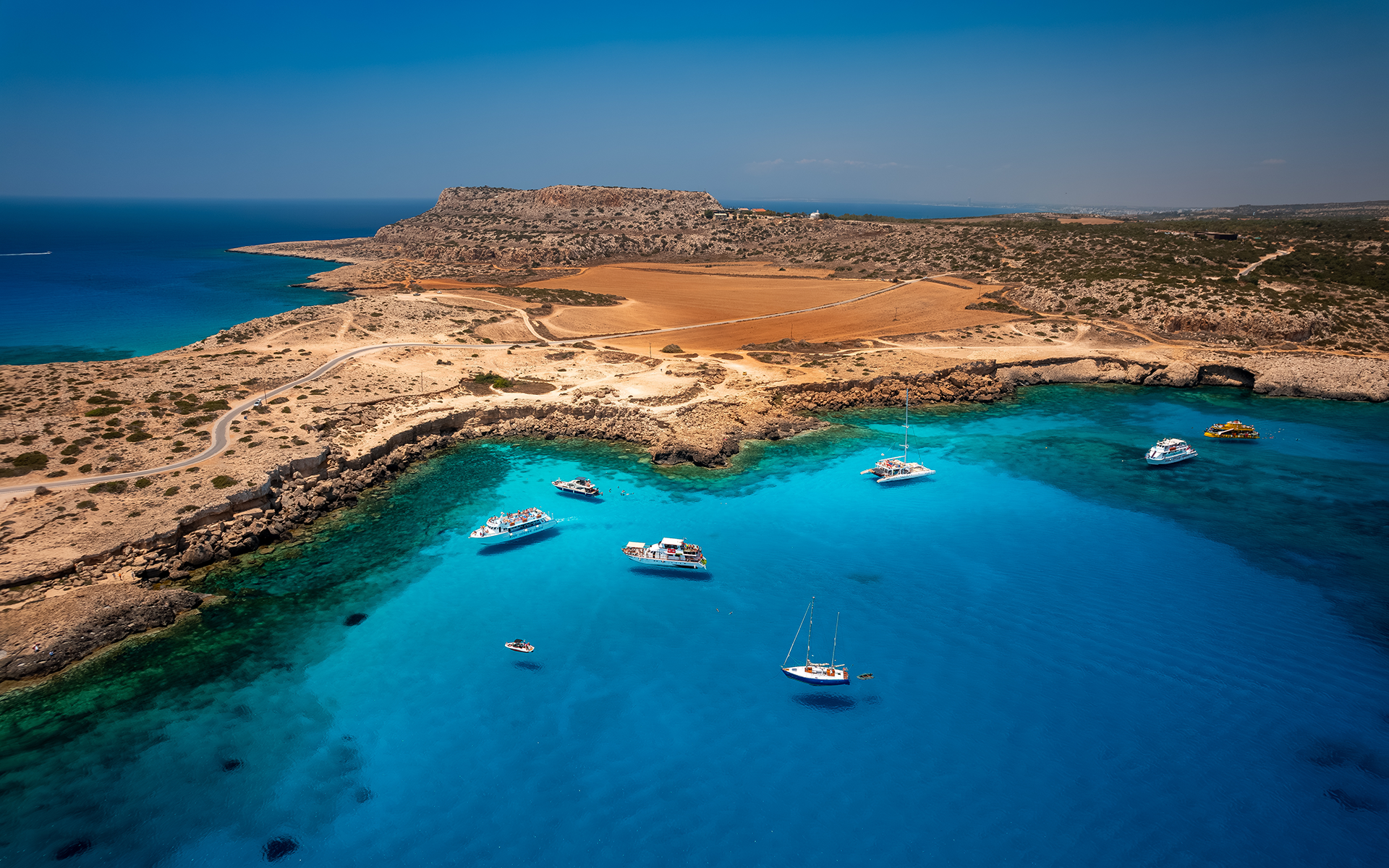
A candid comparison of Cyprus, Greece and Italy for your wedding abroad, covering value, logistics, weather and guest experience.
Three beautiful countries, three very different weddings. If you are torn between the sun-warmed simplicity of Cyprus, the postcard drama of Greece or the timeless romance of Italy, you are not alone — it is one of the first questions almost every couple asks us. Here is an honest look at how they compare.
The value question
Cyprus tends to offer the strongest value of the three, and it is usually the deciding factor for couples working to a considered budget. Venue hire, catering and accommodation generally cost less than equivalent options in Santorini or the Amalfi Coast, without any compromise on setting — think whitewashed chapels, clifftop terraces and beach tavernas that would not look out of place in a glossy magazine. Our package weddings in Cyprus run from £9,500 to £11,000 depending on guest numbers, and that figure often stretches further than a similar budget would in Italy or the Greek islands, where venue exclusivity and demand push prices up considerably, particularly in peak season.
Greece, and Santorini in particular, carries a premium because of its global popularity — you are paying partly for the view that appears in every wedding magazine. Italy sits at the top end, especially in sought-after regions like the Amalfi Coast or Tuscany, where villa hire and catering are priced for a luxury market. None of this means Greece or Italy are unaffordable, but couples should budget more generously if their hearts are set on the most photographed corners of either country.
Getting there and getting everyone settled
This is where Cyprus quietly wins for British and Irish couples. Direct flights from most UK regional airports run at around four and a half hours, and the island's tourism infrastructure is built around exactly this kind of travel — English is widely spoken, driving is on the left, and the currency is the euro with none of the confusion some destinations bring.
Greece varies enormously by island. Athens and Thessaloniki are easy to reach directly, but smaller islands such as Santorini or Zante often require a connecting flight or ferry, which adds cost and complexity for guests, particularly elderly relatives or families with young children. Italy is straightforward to fly into, but wedding venues are frequently rural — a stunning Tuscan villa might be an hour or more from the nearest airport, meaning transfers and logistics need careful planning.
For groups of twenty, forty or eighty guests, these details matter. Cyprus's concentration of hotels, venues and airports within a fairly small area makes coordinating a large wedding party considerably simpler.
Weather and timing
All three destinations offer a long wedding season, but the character of that sunshine differs. Cyprus enjoys reliably warm, dry weather from April through to late October, with July and August bringing intense heat that many couples choose to avoid in favour of the gentler warmth of May, June or September.
Greece follows a similar pattern, though island weather can be breezier — the meltemi winds that sweep across the Aegean in July and August are worth discussing with your planner if you are set on a beach ceremony. Italy's climate varies by region: the south enjoys long, hot summers similar to Cyprus and Greece, while regions like Tuscany and Lake Como have a slightly shorter, milder season and cooler evenings from October onwards, which some couples actually prefer.
The wedding day itself
Legal requirements differ across all three, and this often shapes the practical decision. Cyprus has one of the most straightforward legal processes for UK and Irish couples, with documentation typically handled well in advance and a civil ceremony that can take place with minimal fuss, followed by a blessing or symbolic ceremony at your chosen venue if you prefer. Many couples now separate the legal paperwork from the celebration entirely, marrying legally at home and holding a symbolic ceremony abroad — an approach that works beautifully in any of the three countries and removes a layer of bureaucracy from your day.
Greece and Italy both require more paperwork, often including documents translated and apostilled, and Italy in particular has a reputation for administrative thoroughness. None of this is insurmountable, but it does mean earlier planning and, ideally, a team on the ground who understands local requirements.
Choosing what matters most to you
There is no wrong answer here — only the right fit for your priorities. If value, ease of travel and a dedicated on-island team matter most, Cyprus is very hard to beat. If you have your heart set on a specific Greek island for its particular light and landscape, that feeling is worth honouring, provided you budget generously and plan guest logistics early. If Italian romance, cuisine and architecture are non-negotiable for you, the investment often feels entirely worthwhile to couples who choose it.
What we find, time and again, is that couples who start with an open mind about destination and a clear sense of their guest list and budget tend to arrive at the right choice quite naturally — and Cyprus wins that conversation more often than not, simply on the strength of what it offers for the money.
Whichever destination speaks to you, the practicalities of planning a wedding abroad — accommodation blocks, transfers, legalities, timelines — are the same wherever you go, and they are exactly what we handle every day. If you would like to talk through your options with someone who knows all three destinations well, we would be glad to arrange a free consultation and help you find the setting that feels right for you.