
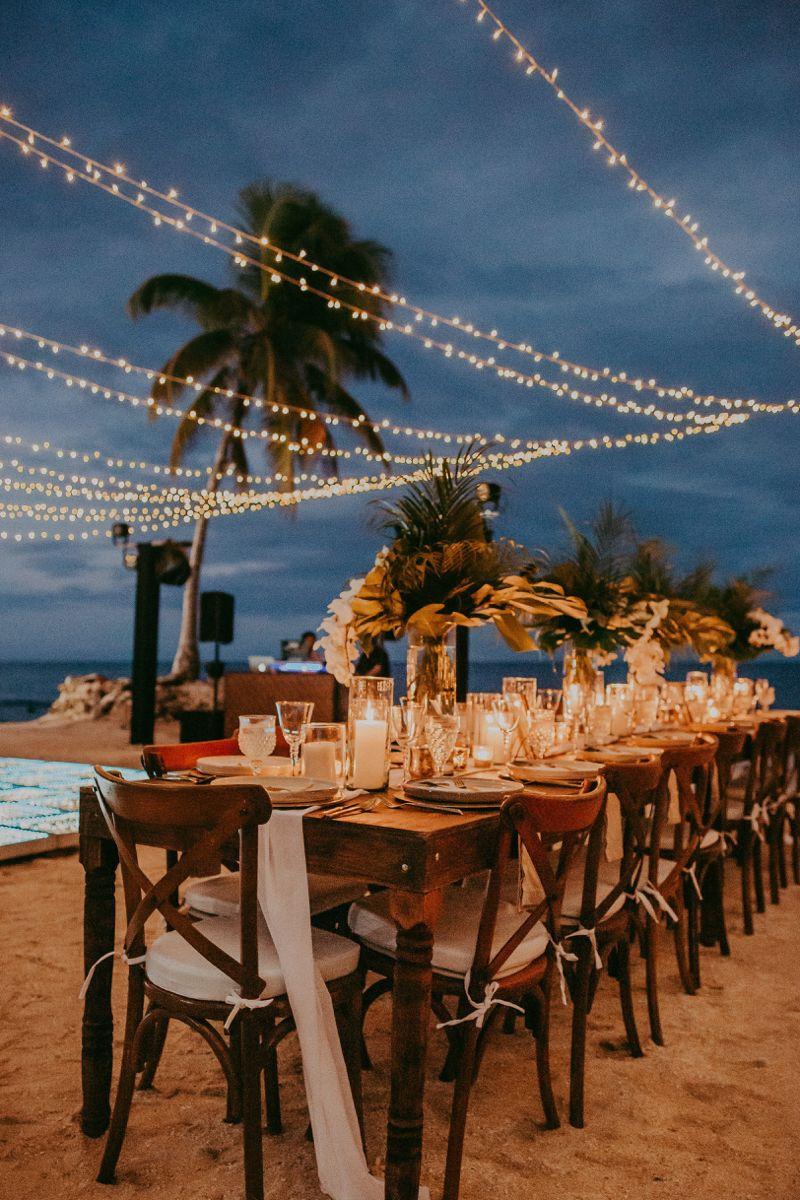
Sand between your toes or a private terrace all to yourselves? We weigh up the real differences to help you choose.
There is no wrong answer here, only the right answer for you. Some couples have pictured bare feet in the sand since childhood; others want a private terrace, a pool for the children to splash in, and a garden that belongs to them alone for the day. Both make for beautiful weddings — the trick is knowing what each one actually involves before you commit.
The case for a beach wedding
A beach ceremony has a simplicity that is hard to beat. The backdrop does most of the work — you need very little in the way of decoration when the setting is the Mediterranean itself. In Cyprus, spots like Aphrodite's Rock or the quieter coves around Protaras and Paphos offer that postcard moment without needing much dressing at all.
The honest trade-offs: public beaches mean public spaces. You may share the sand with sunbathers or passers-by, particularly in high season, though a good planning team will know which times of day and which stretches of coast give you the most privacy. Beaches also mean sand in heels, wind that has opinions about veils and hairstyles, and no shade unless you arrange it. Ceremonies work beautifully; a full wedding breakfast on sand for forty guests, with tables, chairs and catering, is more logistically involved and usually needs a nearby restaurant or beach club terrace rather than the sand itself.
The case for a villa wedding
A villa gives you something a beach cannot: total privacy for the entire day. From your first glass of fizz to the last dance, the space is yours. No passing tourists, no shared sunset, no packing up by a certain hour because the beach belongs to everyone else too. For couples who want their morning preparations, ceremony, wedding breakfast and evening celebrations all in one place, without shuttling guests between venues, a villa is hard to beat.
Villas also tend to suit families and multi-generational guest lists particularly well. Grandparents can rest in the shade, children can use the pool safely, and there is generally somewhere quiet to retreat to if the day gets long. Many of our couples in Cyprus choose villas precisely because they can accommodate close family on-site for the whole week, turning the wedding into a proper gathering rather than a single afternoon.
The trade-off is that a villa needs more building — you are creating the atmosphere rather than borrowing it. Furniture, flowers, lighting and styling matter more because you are not relying on a natural view to carry the day. This is where a good planning team earns its keep, ensuring the space feels intentional rather than simply "borrowed for the occasion."
Weather, practicality and the time of year
Cyprus enjoys a long, reliable wedding season, roughly April through October, with July and August bringing the strongest heat. Beach ceremonies work best scheduled for late afternoon, both for the light and for comfort — midday sun on open sand is not kind to guests in suits. Villas, by contrast, usually offer shaded terraces, covered dining areas and pools, giving you more flexibility across the hours of the day and more comfort if you are marrying in peak summer.
Wind is worth genuinely considering for beach weddings — coastal breezes can affect everything from your hair to whether candles stay lit. Villas, particularly those with walled gardens or courtyards, tend to be more sheltered.
Guest experience and logistics
Think about your guests' whole day, not just the ceremony. A beach wedding often means guests travelling from their hotel to the beach, and possibly on again to a separate reception venue — three locations, three sets of transfers. A villa wedding can consolidate everything into one address, which is considerably kinder to elderly relatives, small children and anyone unfamiliar with the area.
That said, some couples love the idea of guests arriving by the sea, with the sound of waves as a natural soundtrack to the vows. If that matters more to you than convenience, it is a perfectly reasonable priority — just factor transfers into your planning and budget.
Cost is another honest consideration. Beach ceremonies themselves are often more modest to arrange, particularly on public beaches where permit costs are relatively low, though catering and facilities still need to be brought in from elsewhere. Villa hire costs vary considerably depending on size, location and season, but you are paying for exclusivity and flexibility across the full day. In Cyprus, our packages for either style run from £9,500 to £11,000 depending on guest numbers, making it one of the better-value Mediterranean destinations regardless of which setting you choose.
Can you have both?
Many couples do — a beach ceremony at golden hour, followed by a reception at a nearby villa or beachfront restaurant. This gives you the romance of the sea for your vows and the comfort and privacy of a villa for the celebration that follows. It does mean an additional transfer for guests, but it is often the sweetest of both worlds if budget and logistics allow.
A few honest questions to ask yourselves
Do you want total privacy, or are you happy sharing your backdrop with strangers for twenty minutes? Are your guests mostly younger and mobile, or would they benefit from staying in one place? Is this a summer wedding where shade matters, and how do you feel about wind, sand, and a bit of unpredictability in exchange for that view?
There is genuinely no wrong choice — only the one that fits how you picture your day and who you are sharing it with.
If you would like to talk it through properly, we would love to help. Our team plans weddings across Cyprus, Greece, Malta, Spain and Italy, handling everything from venue selection to guest accommodation and on-the-day concierge, so you can enjoy the choosing as much as the day itself. Get in touch for a free, no-obligation consultation and we will help you work out which setting — beach, villa, or a little of both — is truly right for you.